
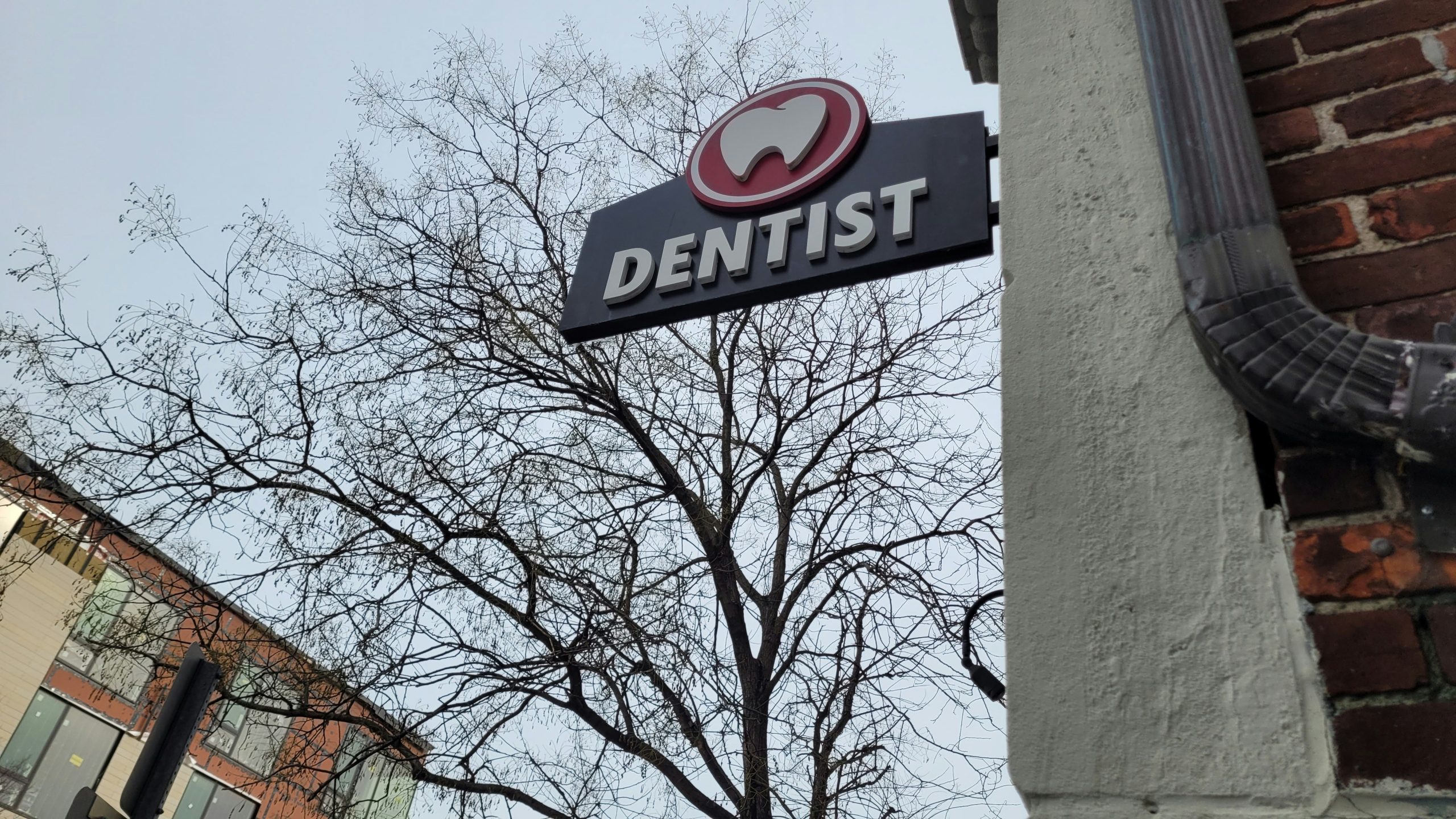
How Dublin’s Healthcare and Dental Industry Has Grown Over the Last Decade?
If you’ve lately tried to make a GP appointment in Dublin or gone by yet another construction site near St. James’s, you’ll have noticed a fundamental shift in the city’s health environment.
The last ten years have not been solely about incremental progress. They have rewritten the map—literally and metaphorically—of how healthcare and dentistry are delivered in the capital.
Having worked with practice managers and clinical leads at numerous Dublin hospitals and dental groups during this time, I’ve seen the pressures rise and the responses evolve.
This is not the story of a system that was cleanly solved. It’s the narrative of a city reacting, sometimes clumsily, sometimes wonderfully, to constant demand, aging infrastructure, and a workforce that cannot be miraculously expanded overnight.
The Great Uncoupling: Public Pressure, Private Response
The single most important trend shaping Dublin’s healthcare over the past decade is the growing divergence between public and private provision. It’s not that one has grown at the expense of the other; rather, both have grown, but in response to completely different forces.
Public hospitals have been caught in a pincer movement. On one side, population growth. Dublin’s population has surged, with CSO estimates showing the state adding nearly 100,000 people in a single recent year—the fastest growth in sixteen years. On the other side, the legacy of the 2008 financial crash. Hiring freezes and budget constraints throughout the 2010s meant the workforce didn’t keep pace.
The result? By 2022, the number of people waiting for public hospital appointments had ballooned by 54% compared to five years earlier. Waiting lists became a daily news staple, and nearly 500,000 people were stuck beyond official maximum wait times by 2023.
Private healthcare filled the breach. Dublin has always had a strong private sector—the Bon Secours and the Mater Private are established names—but the last decade supercharged their role. With 2.4 million people holding private health insurance by mid-2022, the economics became straightforward: if you could afford insurance or out-of-pocket payments, you could bypass the queues. Private hospitals in Dublin haven’t just expanded beds; they’ve specialised, carving out niches in orthopaedics, ophthalmology, and complex diagnostics that public patients struggle to access promptly.
A note on trade-offs: Private expansion has absorbed demand that would otherwise collapse the public system entirely. But it’s also created a two-tier dynamic where a consultant you see privately on Tuesday is the same person working a public clinic on Wednesday—stretching the same pool of specialists even thinner.
Dental Care’s Lost Decade and the Corporate Response
If hospital care shows a system under strain, dentistry in Dublin reveals what happens when funding never returns to pre-crash levels.
Between 2009 and 2023, State spending on dental care for medical card and PRSI patients was cut by an estimated €800 million. That’s not a blip; that’s a structural withdrawal. The Dental Treatment Services Scheme (DTSS), which provided basic care to adults with medical cards, has “effectively collapsed,” according to the Irish Dental Association. Compared to 2012, the scheme has lost 800 dentists.
For Dublin patients, this has meant:
- School screening was missed for over 100,000 children in 2023 alone.
- Waiting times of two to three years for general anaesthesia for vulnerable children and adults with disabilities.
- A “clear divide” between those who can pay privately and those reliant on an underfunded public system.
Yet total industry revenue for dental practices in Ireland still grew to an estimated €957.7 million in 2024. How? Private insurance and out-of-pocket payments now dominate the revenue mix, and corporate groups have moved aggressively to capture that spending.
Xeon Dental Services and Dental Care Ireland have emerged as the two largest players, consolidating smaller practices under management structures that handle the business side, HR, marketing, and procurement, while clinicians focus on clinical work. Walk through any Dublin suburb, and you’ll see the rebranding: the independent surgery you remember from ten years ago may now carry a corporate badge.
The workforce reality behind this growth is stark. Dentistry courses at Trinity and UCC now require maximum Leaving Cert points, with places allocated by lottery simply because demand is so intense. Yet roughly half of undergraduate dental places currently go to non-EU students, most of whom return home after qualifying.
A new RCSI dental school opened to boost supply, but its 20 Irish/EEA places barely dent the shortfall. For Dublin patients, this means competition for appointments isn’t easing anytime soon.
Bricks and Mortar: The Capital Plan Reshapes Dublin
If you’ve driven through Dublin’s north inner city recently, you’ve seen the future taking physical shape. The HSE Capital Plan 2026 represents the most concentrated health infrastructure investment in a generation.
The Rotunda Hospital is undergoing a complete reconfiguration: Acute Care Block redevelopment, Neonatal Intensive Care Unit upgrade, and expansion into Dominick Street properties for laboratory and gynaecology services. This isn’t cosmetic—it’s about cramming 21st-century medicine into Georgian structures never designed for it.
The Mater Hospital campus is being fundamentally remade. New theatres, expanded imaging capacity, a Coronary Care Unit, a helipad for major trauma, and an Acute Mental Health Unit. The Mater has always been a national centre; these additions cement that role while acknowledging that trauma and cardiac care can’t wait for traffic to clear the North Circular Road.
Grangegorman continues its transformation from institutional past to healthcare future, with new mental health accommodation and a Community Nursing Unit serving an ageing population.
And then there’s the elephant in the room: the National Children’s Hospital at St. James’s. Love it or hate it for its budget overruns, it’s undeniably one of the largest healthcare investments in the state’s history. When it opens, it will concentrate paediatric expertise on a scale Dublin has never seen—but also test whether the transport and housing infrastructure around it can cope.
The Surgical Hub Strategy: Day Cases, Done Differently
Perhaps the most operationally significant shift in Dublin’s hospital landscape is the move toward dedicated surgical hubs.
The South Dublin hub, officially opened in early 2025 under St. James’s governance, is a blueprint. Four theatres dedicated solely to day-case surgery and minor procedures, designed to deliver 10,000 additional surgeries and 18,500 outpatient consultations annually.
Why does this matter? In a traditional acute hospital, scheduled surgery competes for theatre time with emergency trauma, deteriorating patients, and staff shortages. By separating scheduled from unscheduled care, these hubs let surgical teams work predictably. No more cancelled procedures because an emergency case ran over.
The Swords hub, projected for completion in early 2026, will extend this model to north Dublin. For patients, it means procedures done faster and closer to home. For the system, it frees up acute hospital capacity for the complex work only they can handle.
Common mistake to avoid: Patients often assume a surgical hub is a “lesser” hospital. In reality, the standards are identical; the difference is the absence of emergency distractions. Recovery times are often better because the environment is calmer and more predictable.
Digital and AI: Behind-the-Scenes Transformation
The most visible changes are buildings. But the most profound may be invisible.
At St. James’s Hospital, the laboratory processes over 12 million tests annually, and more than 70% of clinical decisions are informed by lab results. Over the last few years, St. James’s migrated its Laboratory Information Management System (LIMS), iLab Telepath, from on-premise servers to the cloud.
For a clinician, that means lab data is accessible securely, in real time, with system resilience that on-site servers couldn’t guarantee. For a patient, it means decisions happen faster because the data pipeline doesn’t jam.
Meanwhile, Smart D8—a partnership between Dublin City Council, St. James’s, and others—has spent five years piloting community-level digital health innovations. Current projects include:
- AI-powered digital scribe tools to reduce GP administrative burden and flag subtle cancer symptoms earlier
- Remote monitoring for heart failure patients, transmitting blood pressure and weight data directly to clinicians
- Community football programmes engaging men in health conversations, with a demonstrated social return of €17.60 per €1 invested
At a larger scale, the AINM project, led by UCD and backed by €9.1 million in State funding, aims to develop hospital-ready AI decision-support tools using large language models and advanced analytics. Partners include Microsoft, Dell, and several indigenous Irish tech companies. The goal isn’t abstract research—it’s clinical decision support systems that slot into existing workflows and genuinely change practice.
What This Means for Patients and Practitioners?
If you’re living in Dublin and navigating this system—either as a patient or a professional—here’s what a decade of change means for your daily reality.
For patients:
- Public waiting lists remain long, but the surgical hubs and increased HSE funding (€23.5 billion in Budget 2024) are slowly eating into the backlog. If you need day surgery, ask whether a hub referral is possible.
- Dental access depends on your payment route. Private insurance or cash gets you seen relatively quickly. Medical card holders face shrinking options and longer travel. If you have children, check whether school screening is active in your area; it’s no longer universal.
- Digital tools are becoming normal. Remote monitoring for chronic conditions like heart failure is moving from pilot to mainstream. If offered, it usually means fewer hospital trips, not more.
- Major hospital redevelopments mean disruption. The Rotunda, the Mater, and St. James’s are active construction sites. Allow extra time for appointments and expect departments to move.
For practitioners:
- Corporate consolidation in dentistry is probably not done. If you’re in independent practice, the decision to join a group or stay solo increasingly hinges on whether you want to manage HR, IT, and marketing or practice dentistry. There’s no right answer, but the trade-off is real.
- AI is coming to administration before diagnosis. The near-term wins are in reducing documentation burden—like the Smart D8 scribe tool—not in replacing clinical judgement. Engage with these tools early; clinicians, not outsiders, design them.
- The workforce shortage isn’t resolving quickly. With dental school places constrained and hospital consultant posts hard to fill, expect continued competition for talent. Practices that offer flexible hours, CPD support, and sane rotas will win.
External Resources for Deeper Understanding
- Irish Dental Association (IDA) – www.dentist.ie
- Essential for workforce data, DTSS updates, and policy positions.
- Health Service Executive (HSE) – Surgical Hubs – www.hse.ie
- Check here for hub locations, referral pathways, and waiting list updates.
- Smart D8 – smartd8.ie
- Detailed information on current health tech pilots and community programmes.
- Digital for Care 2030 – www.gov.ie
- Ireland’s national eHealth strategy framework.
The Next Five Years
The next decade won’t look like the last. The physical infrastructure now under construction—the Rotunda redevelopment, the Children’s Hospital, the surgical hubs—will be complete. The question is whether the workforce can grow to match.
Sláintecare, the long-promised move toward universal healthcare, remains scheduled for 2030 implementation. If delivered, it would fundamentally reshape the public-private balance. If delayed, the two-tier dynamic will harden further.
For Dublin, one thing is certain: the city’s role as a national centre of excellence will intensify. Patients from across Ireland will continue to travel here for complex care. The pressure on transport, accommodation, and support services around our major hospitals will grow accordingly.